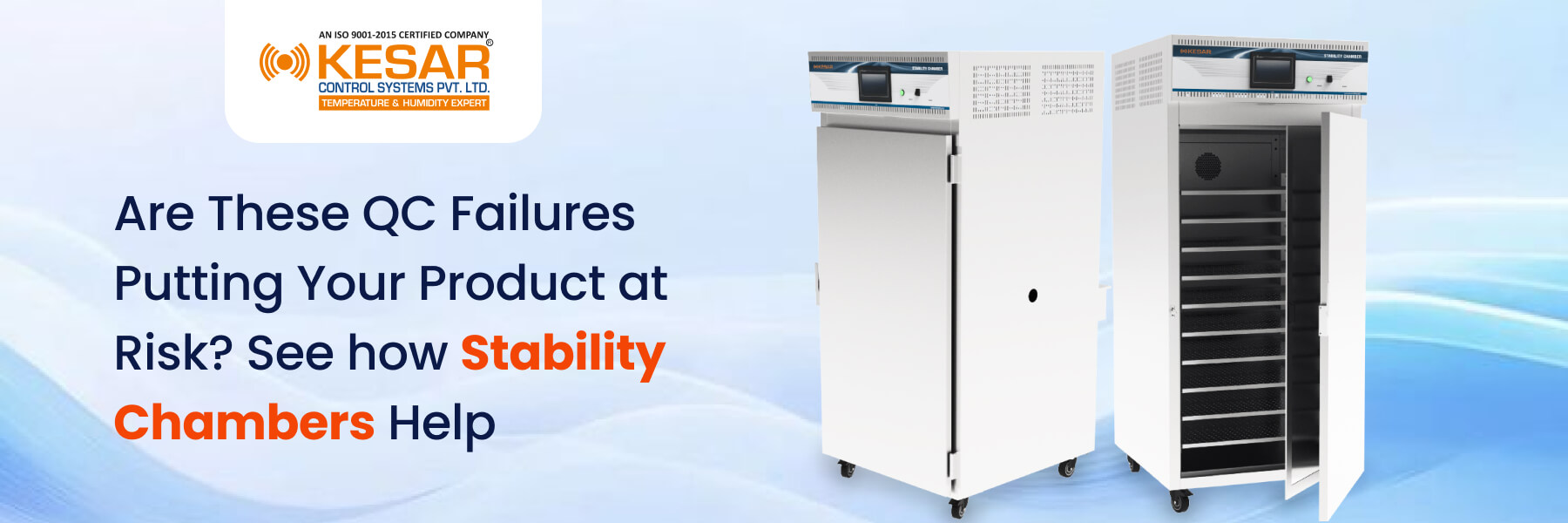
Are These QC Failures Putting Your Product at Risk? See How Stability Chambers Help
Quality control is the backbone of any product-driven industry. Whether you are manufacturing pharmaceutical drugs, food products, cosmetics, or specialty chemicals, maintaining consistent product quality is not just a best practice; it is a regulatory obligation and a matter of public safety.
Yet, despite strict internal processes and advanced manufacturing technologies, QC failures continue to occur. And when they do, the consequences can be severe: product recalls, regulatory penalties, damaged brand reputation, and, most critically, harm to end users.
The root of many of these failures is surprisingly simple: inadequate environmental control during testing and storage. Even small deviations in temperature or humidity can compromise product integrity, lead to inaccurate stability data, and ultimately result in products reaching the market that are unsafe or ineffective.
This is exactly where stability chambers step in. Designed to simulate real-world environmental conditions with precision and consistency, stability chambers play a critical role in preventing quality failures before they become costly problems. In this blog, we will explore the most common QC failures industries face and how stability chambers help prevent them.
Common QC Failures That Can Impact Product Quality
Understanding where and why QC failures occur is the first step toward prevention. Here are the most frequently encountered quality control failures across industries:
1. Temperature Variations
Products exposed to temperatures outside specified limits, even briefly, can undergo significant chemical and physical changes. In the pharmaceutical industry, active ingredients may degrade faster than anticipated, affecting potency and shelf life. In the food industry, temperature excursions can accelerate spoilage and microbial growth.
Key risks include:
- Reduced drug potency and efficacy
- Accelerated product degradation
- Inaccurate shelf-life predictions
- Regulatory non-compliance during audits
2. Humidity-Related Failures
Relative humidity (RH) is one of the most critical environmental parameters to control. Moisture absorption or loss can dramatically alter a product's physical and chemical properties. Tablets may harden or disintegrate prematurely. Packaging seals may fail, allowing moisture ingress that compromises product stability.
Common humidity-related failures include:
- Packaging degradation and seal failures
- Moisture absorption leading to product instability
- Label deterioration affecting traceability
- Microbial contamination risk in food and biotech products
3. Inconsistent Product Performance Across Batches
Batch-to-batch inconsistency is a major concern in regulated industries. Variations in product performance, whether in drug potency, food quality, or cosmetic formulation, can be traced back to inconsistent environmental conditions during stability testing. When different batches are tested under varying conditions, results become unreliable and cannot be used to make confident regulatory submissions.
4. Packaging Integrity Issues
Packaging is the last line of defense between a product and external environmental factors. QC failures often stem from packaging materials that have not been properly tested under realistic stress conditions. Label deterioration, seal failures, and moisture ingress are all signs of inadequate packaging validation, and all are preventable with proper stability testing.
5. Shelf-Life Prediction Errors
Incorrectly determining a product's expiry date is one of the most serious QC failures. Overestimating shelf life means unsafe or ineffective products reach consumers. Underestimating it leads to unnecessary waste and financial losses. Both outcomes are avoidable, but only when shelf-life studies are conducted in properly controlled and validated stability chambers.
The Hidden Costs of QC Failures
The true cost of a quality control failure extends far beyond a single rejected batch. Industries that ignore or underinvest in proper stability testing face:
- Product recalls are costly to execute and devastating to brand reputation
- Regulatory Non-Compliance, GMP observations, warning letters, and potential product bans
- Damage to Brand Reputation, Loss of customer trust, and long-term market confidence
- Increased Production Costs, Rework, retesting, and rejected batches drive up costs significantly
According to global pharmaceutical regulatory bodies, uninvestigated environmental excursions are among the most common causes of GMP non-conformances. Proactive investment in qualified stability chambers is far less costly than managing a QC failure after the fact.
Why QC Failures Often Go Undetected
Many QC failures do not surface until after a product has been released to the market. There are several reasons for this:
- Limited Real-World Simulation: Testing environments that do not accurately replicate actual storage and transport conditions
- Inadequate Environmental Monitoring: Absence of continuous, real-time monitoring in testing facilities
- Lack of Long-Term Stability Data: Insufficient testing periods that fail to capture gradual degradation
- Insufficient Testing Procedures: Protocols that do not comply with ICH Q1A guidelines or GMP requirements
All of these gaps are directly addressed through the use of validated, well-maintained stability chambers with robust monitoring and data recording systems.
How Stability Chambers Help Prevent QC Failures
Stability chambers are purpose-built to eliminate the environmental variability that causes QC failures. Here is how they directly address each of the failure modes discussed above:
Simulate Real-World Storage and Transport Conditions
Modern stability chambers can precisely replicate a wide range of temperature and humidity conditions, from tropical climates (40°C / 75% RH) to refrigerated storage (2°C–8°C). This allows manufacturers to predict how products will behave throughout their entire supply chain before they ever reach a customer. By stress-testing products under these conditions, QC teams can identify and correct potential failures at the development stage, not after market release.
Support Long-Term, Intermediate, and Accelerated Stability Studies
In line with ICH Q1A and GMP requirements, stability chambers support all three categories of stability testing. Accelerated testing at elevated conditions (e.g., 40°C / 75% RH) provides early insight into product degradation patterns, enabling faster decision-making during product development. Long-term studies (25°C / 60% RH) confirm shelf-life claims with reliable, regulatory-grade data.
Detect Product Degradation Early
By continuously monitoring environmental conditions and recording data throughout the testing cycle, stability chambers allow QC teams to identify early signs of product degradation, such as changes in color, texture, potency, or pH, before the product reaches the market. This early detection is critical for avoiding costly recalls and regulatory action.
Verify Packaging Performance Under Realistic Conditions
Packaging validation is an essential part of QC. Stability Chambers allow manufacturers to test packaging materials under varying temperature and humidity conditions, ensuring that seals hold, labels remain intact, and barrier properties are maintained. This is especially important for moisture-sensitive products like biologics, injectables, and hygroscopic oral dosage forms.
Improve Batch-to-Batch Consistency
When all batches are tested under the same validated environmental conditions, the resulting stability data is consistent, reproducible, and reliable. This consistency is essential not only for product quality but also for regulatory submissions, where batch-to-batch variability in stability data can raise serious concerns.
Key Stability Chamber Tests That Support Quality Control
A well-equipped stability chamber program covers multiple types of testing to comprehensively address QC risks:
- Accelerated Stability Testing: Predicts long-term stability within shorter timeframes using elevated temperature and humidity
- Long-Term Stability Testing: It confirms shelf-life claims under standard storage conditions over extended periods
- Temperature and Humidity Cycling Studies: Evaluates product and packaging resilience to fluctuating environmental conditions
- Stress Testing: It exposes products to extreme conditions to identify degradation pathways and failure mechanisms
- Packaging Evaluation: Studies assess packaging integrity, moisture barrier performance, and seal strength
Industries That Benefit from Stability Chamber Testing
Stability chambers are not exclusive to one sector. The following industries rely on stability testing as a fundamental part of their quality control strategy:
- Pharmaceutical Industry, Drug product stability, ICH Q1A compliance, shelf-life validation, and regulatory submissions
- Biotechnology and Healthcare, Biological product stability, vaccine storage validation, and medical device testing
- Food and Beverage Industry, Shelf-life determination, packaging integrity testing, and transport condition simulation
- Cosmetics and Personal Care Products, Formulation stability, fragrance degradation studies, and packaging compatibility
- Chemicals and Specialty Materials: Material degradation assessment, stress testing, and environmental durability studies
What to Look for in a Stability Chamber
Not all stability chambers are created equal. For reliable QC outcomes, manufacturers should look for chambers that offer the following:
- Precise Temperature and Humidity Control, with tight tolerances to ensure ICH Q1A and GMP compliance
- Uniform Environmental Conditions, Confirmed through temperature and humidity mapping studies
- Reliable Monitoring and Alarm Systems, Real-time alerts for deviations, door-open alarms, and power failure notifications
- Compliance with ICH and GMP Requirements, including full IQ, OQ, and PQ qualification support
- Comprehensive Data Logging and Reporting, E-records, audit trails, and graphical data analysis for regulatory submissions
How Kesar Control Stability Chambers Support Reliable QC
At Kesar Control Systems, we understand that quality control failures are not just operational setbacks; they are risks to patient safety, regulatory standing, and business continuity. Our stability chambers are designed to eliminate these risks through:
- Accurate environmental control with precise temperature and humidity management
- Compliance-focused design that meets FDA, WHO, ICH, and GMP standards
- Consistent chamber performance supported by full IQ/OQ/PQ qualification protocols
- Comprehensive support for pharmaceutical, biotechnology, food, cosmetic, and industrial testing requirements
- Customised solutions for different testing applications, from bench-top reach-in chambers to large walk-in configurations
Whether you are conducting accelerated stability studies, long-term shelf-life testing, or packaging validation, Kesar Control stability chambers provide the environmental precision and data integrity you need to make confident quality decisions.
Conclusion
Quality control failures, whether caused by temperature excursions, humidity deviations, inconsistent batch performance, or packaging failures, rarely happen without warning. The warning signs are there, but they can only be detected with the right tools and the right testing conditions.
Stability chambers provide manufacturers with the controlled, validated environments needed to identify potential quality risks before products ever reach the market. They support compliance with ICH Q1A, GMP, FDA, and WHO requirements, and they deliver the long-term stability data that underpins every reliable expiry date claim and regulatory submission.
Investing in a qualified stability chamber is not just an equipment decision; it is a commitment to product quality, patient safety, and operational excellence.
Looking for a stability chamber that meets ICH, GMP, FDA, and WHO requirements?
Kesar Control Systems offers a complete range of stability chambers , including reach-in and walk-in models, designed for pharmaceutical, biotechnology, food, and industrial applications.
Contact our team today to discuss your testing requirements and find the right solution for your facility.
Previous Blogs
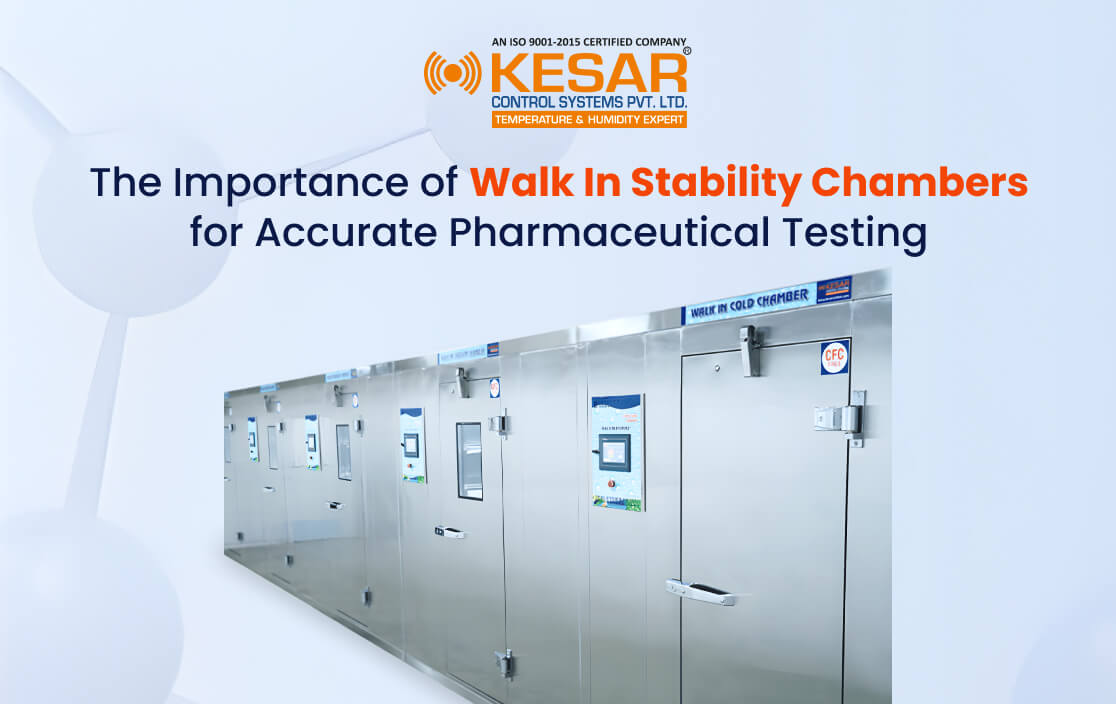
The Importance of Walk-In Stability Chambers for Accurate Pharmaceutical Testing
In the highly regulated pharmaceutical industry, ensuring product stability is essential for safety, efficacy, and compliance. Environmental condition...
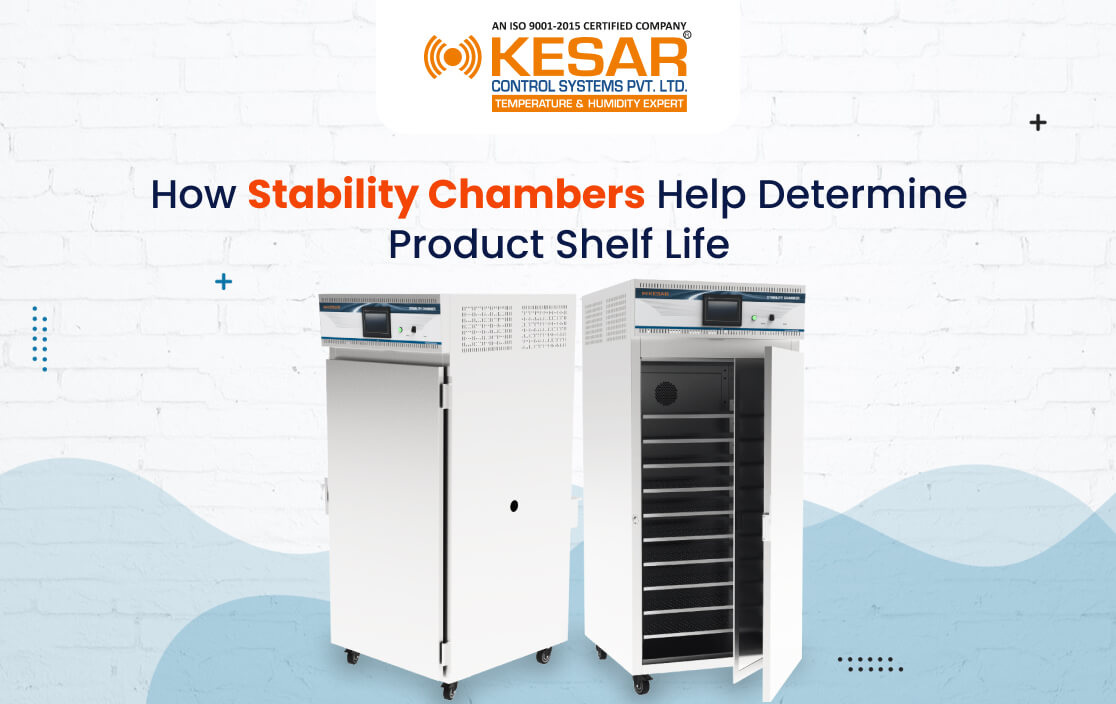
How Stability Chambers Help Determine Product Shelf Life
When you buy a medicine, you expect it to be safe and work well until the expiry date. Have you ever thought about how companies figure out that a med...
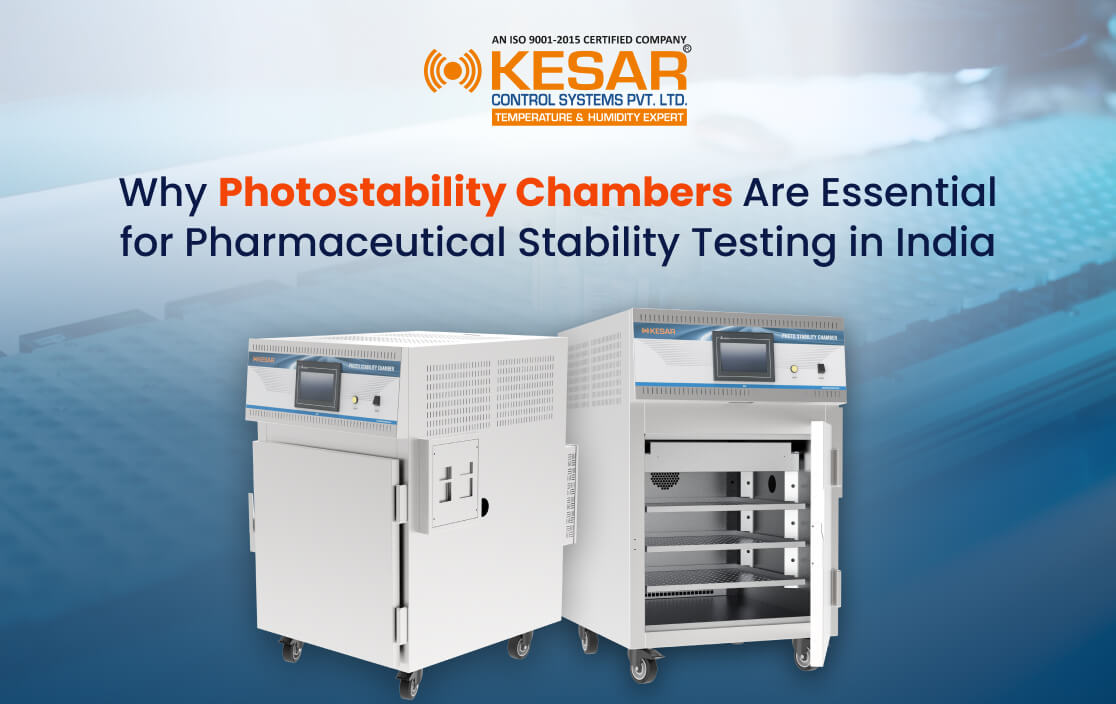
Why Photostability Chambers Are Essential for Pharmaceutical Stability Testing in India
Advanced Photostability Chamber for ICH-Compliant Stability Testing Kesar Control Systems is a trusted photostability chamber manufacturer in India...
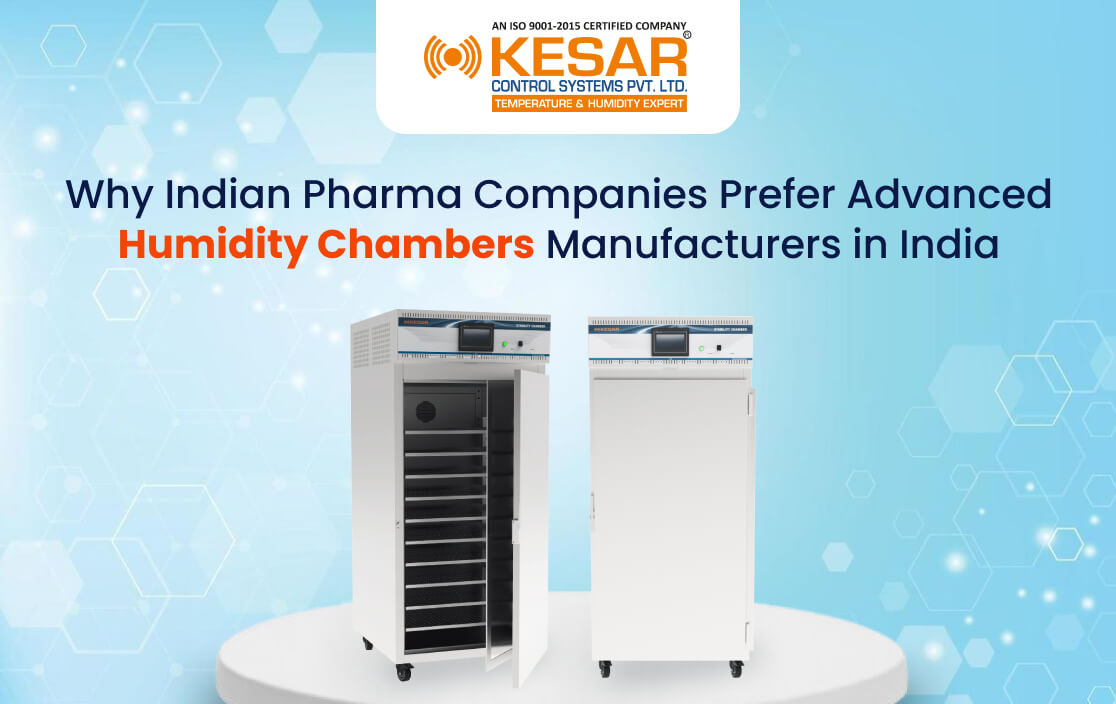
Why Indian Pharma Companies Prefer Advanced Humidity Chamber Manufacturers in India
Introduction The Indian pharmaceutical industry is experiencing rapid growth due to increasing global demand, rising exports, and strict regulatory...
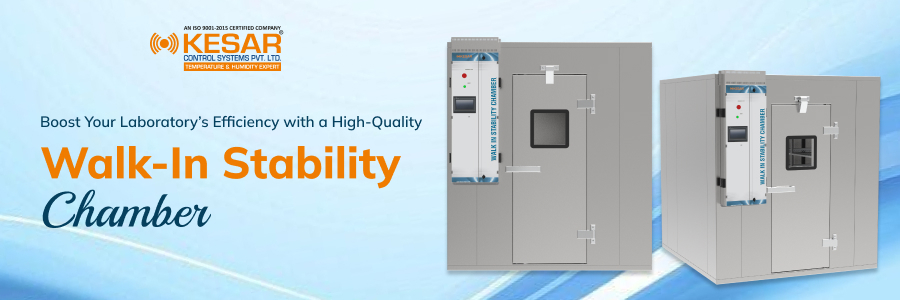
Boost Your Laboratorys Efficiency with a High Quality Walk In Stability Chamber
Introduction: Why Lab Efficiency Matters More Than EverIn todays competitive pharmaceutical, biotechnology, and research secto...