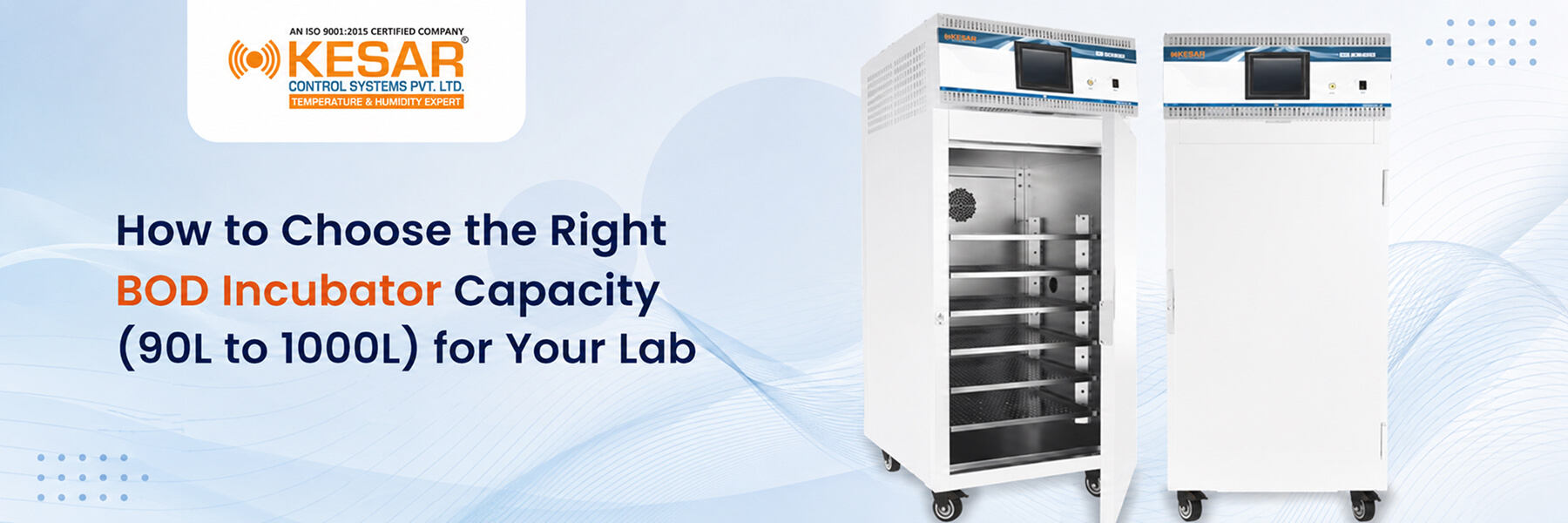
How to Choose the Right BOD Incubator Capacity (90L to 1000L) for Your Lab
A BOD Incubator is used for growing and observing microorganisms in water and wastewater samples under controlled temperature conditions and also allows for tissue culture growth testing. You can find them in pharmaceutical laboratories, chemical testing facilities, government research institutes, and cosmetics companies. However, before deciding to order one, many first-time buyers have a question that puzzles them: what capacity do you really need?
Get it wrong, and you’re either paying for space you’ll never use, or constantly running out of room as your sample load grows. Let’s work through how to think about it.
Why Capacity Matters More Than It Seems?
Capacity isn’t just about how many samples fit inside on a given day. It affects tray count, internal airflow, how evenly temperature holds across the chamber, and how much bench or floor space you’ll need to set aside. A lab running a handful of water samples a week has very different needs than one processing dozens of BOD tests daily alongside tissue culture work.
There’s another layer to this too. A BOD Incubator rarely works in isolation. Most labs running BOD testing also lean on other environment-controlled equipment nearby, whether that’s a Stability Chamber for shelf-life studies, a Humidity Chamber for moisture-sensitive samples, or a Cold Chamber for temperature-sensitive storage. Planning capacity for one machine often means planning your whole lab layout
around several.
The Full Range: 90L to 1000L
Kesar Control’s BOD Incubator lineup spans eight models, from 90 litres up to 1000 litres, each suited to a different scale of lab work:
- 90L (KGOB-90) – 2 trays, a good fit for small labs or teaching setups
- 227L (KGOB-227) – 3 trays, a step up for growing labs
- 325L (KGOB-325) – 5 trays, suited to moderate daily testing loads
- 400L (KGOB-400) – 6 trays, for labs running steady batch testing
- 500L (KGOB-500) – 8 trays, common in mid-sized pharmaceutical or chemical labs
- 600L (KGOB-600) – 5 trays, a wider chamber footprint for bulkier containers
- 800L (KGOB-800) – 7 trays, built for high-volume testing environments
- 1000L (KGOB-1000) – 10 trays, for labs running large batches or parallel studies
Capacity and tray count rise together, but not in a straight line. Wider, shorter chambers, like the 600L model, actually trade tray count for extra shelf space per tray, which matters if you’re incubating larger containers.
What Stays Consistent Across Sizes?
No matter which size you land on, Kesar Control’s BOD Incubators hold the same core performance specs:
- Temperature range: 10°C to 60°C
- Accuracy: ±1.0°C
- Uniformity: ±2.0°C
- Control system: PLC or PID based, depending on the model
This is worth pointing out because capacity shouldn’t come at the cost of precision. A 90L unit and a 1000L unit hit the same temperature control and uniformity standards, so scaling up doesn’t mean scaling down on reliability.
Matching Capacity to Material Grade
Capacity is only half the decision. Kesar Control also offers three build grades across the range:
- STD: S.S.304 interior with G.I. powder-coated exterior
- GMP: S.S.304 interior and exterior
- CGMP: S.S.316 interior with S.S.304 exterior
Labs working under stricter regulatory or GMP-compliant conditions will usually want to pair their capacity choice with the right material grade, rather than picking purely on litres.
Where a BOD Incubator Fits Alongside Other Lab Equipment
Capacity planning gets a lot easier once you zoom out to the bigger picture of what else your lab runs. A few pairings worth thinking about:
- Stability testing labs often run a BOD Incubator alongside a Stability Chamber both need tight environmental control, but serve different purposes.
- Labs handling larger batches sometimes reach for a Walk in Stability Chamber instead of several reach-in units.
- Light-sensitive formulations are usually tested in a Photostability Chamber kept separate from BOD work.
- Moisture-sensitive samples are better off in a dedicated Humidity Chamber.
- Long-term storage of temperature-sensitive reference standards is generally handled by a separate Cold Chamber.
Thinking about capacity across this whole equipment set, instead of the BOD Incubator on its own, tends to prevent the common mistake of undersizing one unit while oversizing another.
A Few Practical Questions to Ask Before Choosing
- How many samples do you realistically process per day or per week, not on your busiest day?
- Do you need room to grow into a larger sample load down the line?
- Are you working with tissue culture, water samples, or both?
- Does your lab have space constraints that rule out the larger footprint models?
- Do you need CGMP-grade construction, or is standard or GMP enough?
If your daily testing volume is genuinely low, the 90L or 227L models keep you from paying for capacity you won’t use. Running a full-scale QC or R&D lab with parallel batches? The 500L to 1000L range earns its larger footprint. For labs somewhere in the middle, the 325L or 400L models tend to hit the right balance.
Conclusion
Choosing the right BOD Incubator capacity really comes down to matching your actual sample throughput, not your busiest possible day, with a model that leaves room to grow. Kesar Control’s lineup covers everything from compact 90L units to large-scale 1000L systems, all built to the same temperature accuracy and uniformity standards, so the real decision is about scale and material grade, not performance trade-offs. And since a BOD Incubator rarely works alone, it’s worth planning its capacity alongside whatever mix of Stability Chamber, Walk in Stability Chamber, Cold Chamber, Humidity Chamber, or Photostability Chamber your lab already depends on.
Previous Blogs
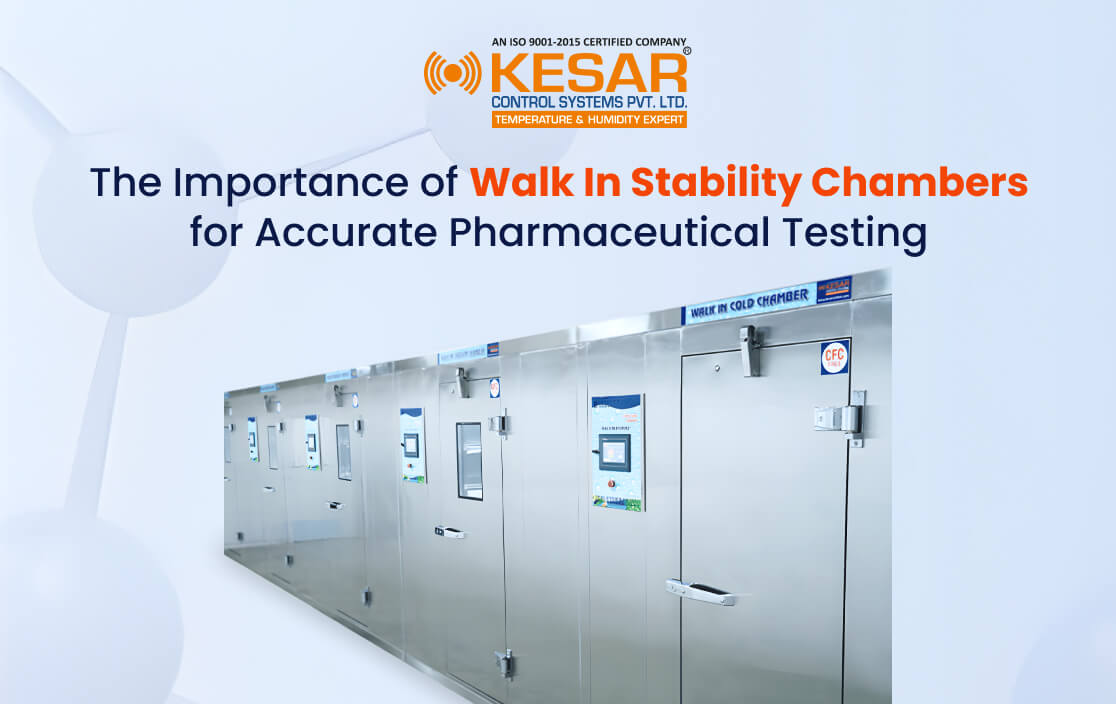
The Importance of Walk-In Stability Chambers for Accurate Pharmaceutical Testing
In the highly regulated pharmaceutical industry, ensuring product stability is essential for safety, efficacy, and compliance. Environmental condition...
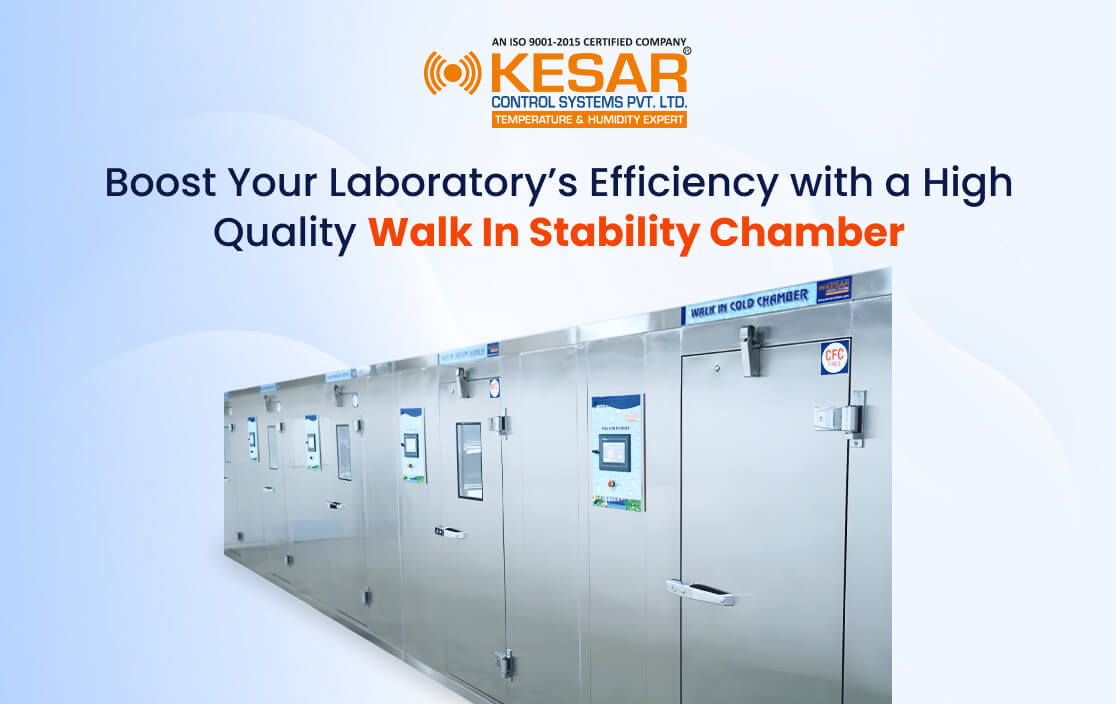
What Is a Stability Chamber and How Does It Work?
In industries where product quality, safety, and regulatory compliance are critical, understanding how products behave under different environmental c...

How to Choose a Cold Chamber Manufacturer You Can Rely On
Your Trusted Guide to Picking the Right Cold Chamber Manufacturer Choosing the right cold chamber manufacturer in India is crucial for laboratories...
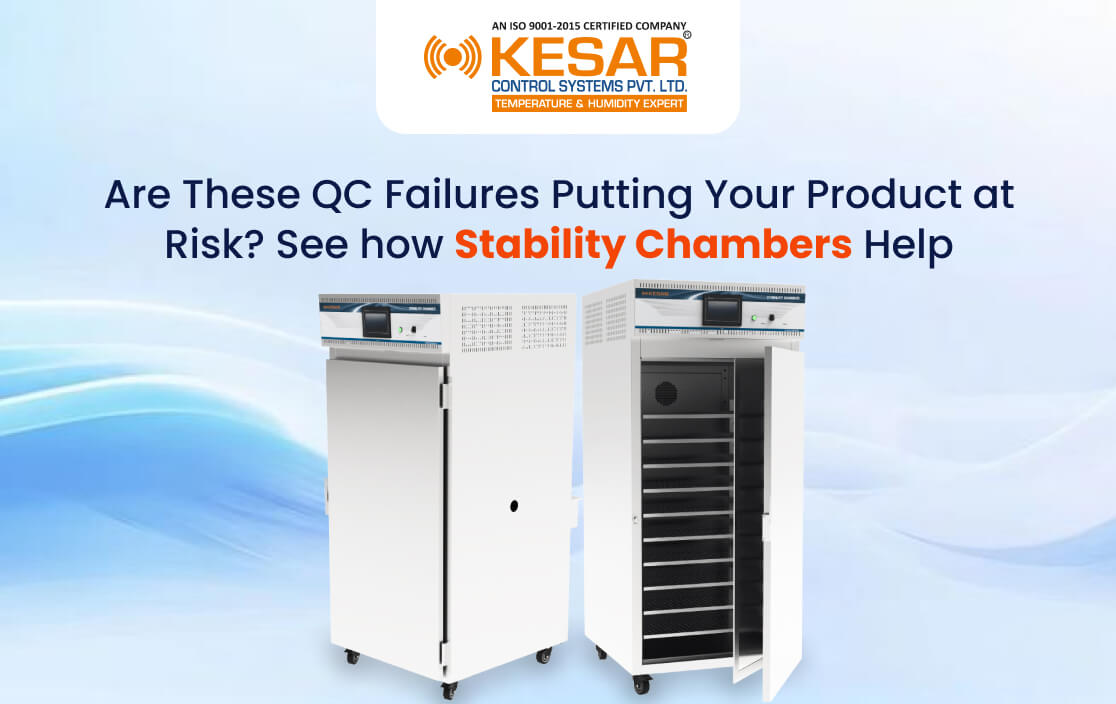
Are These QC Failures Putting Your Product at Risk? See How Stability Chambers Help
Quality control is the backbone of any product-driven industry. Whether you are manufacturing pharmaceutical drugs, food products, cosmetics, or speci...
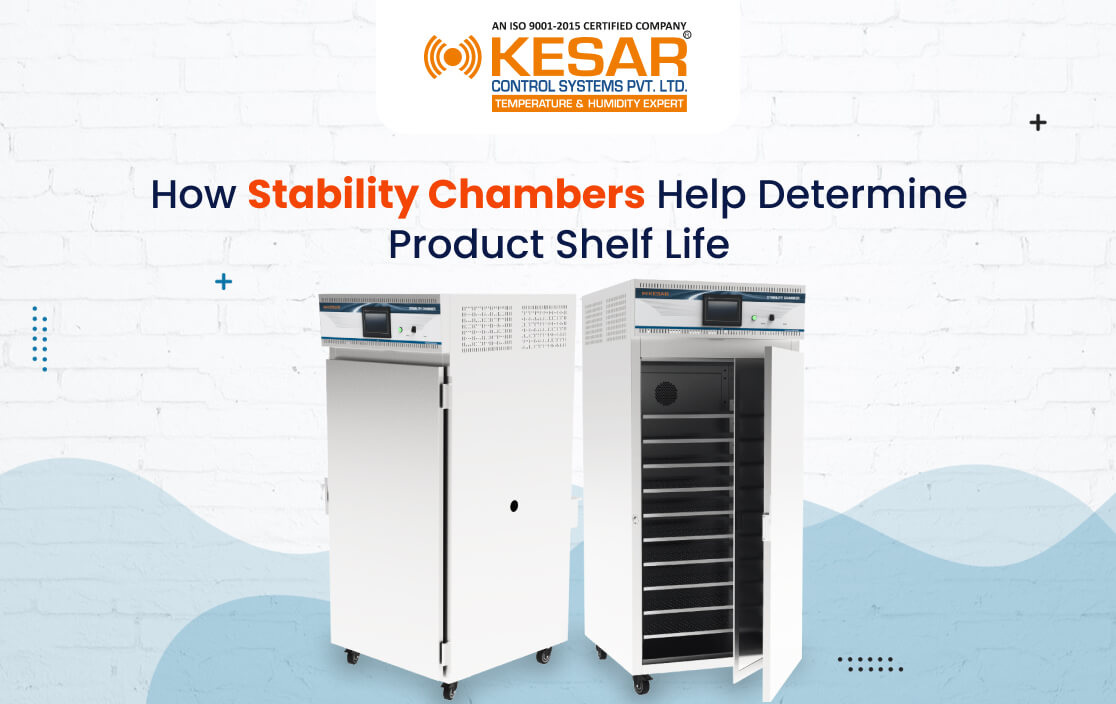
How Stability Chambers Help Determine Product Shelf Life
When you buy a medicine, you expect it to be safe and work well until the expiry date. Have you ever thought about how companies figure out that a med...