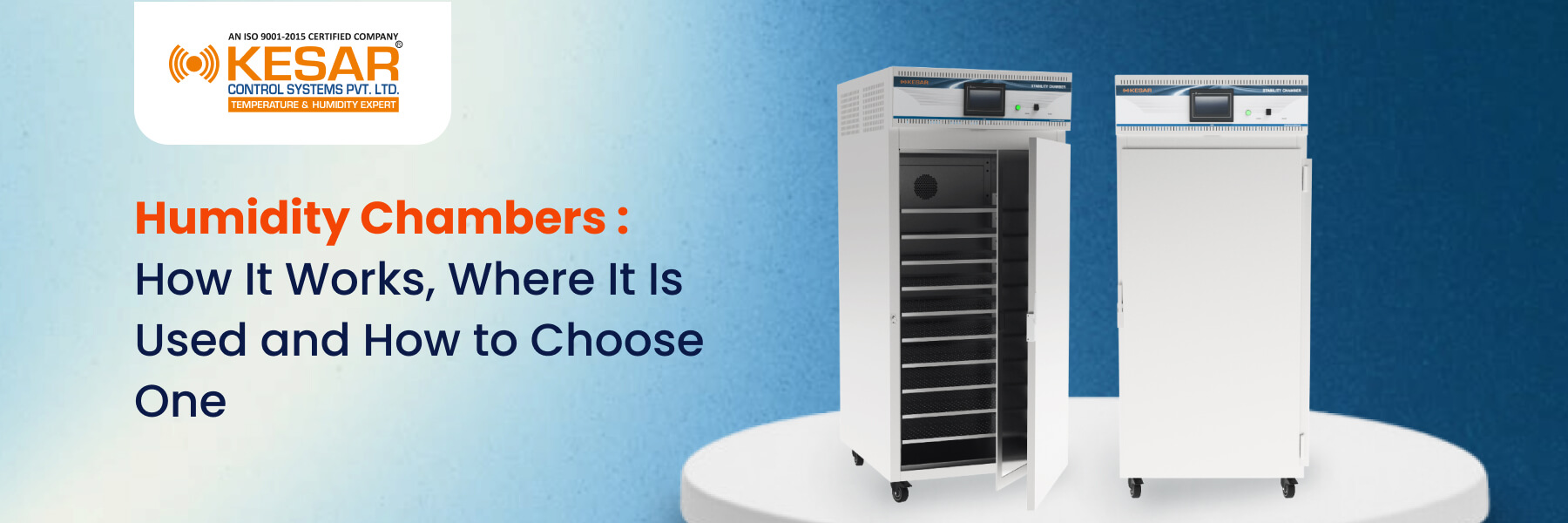
Humidity Chamber: How It Works, Where It Is Used and How to Choose One
Moisture quietly decides how long a tablet stays potent, whether a circuit board corrodes and how a cosmetic cream holds its texture through a humid monsoon. Waiting for the seasons to run these tests is not practical, so laboratories recreate the conditions on demand. That is the job of a humidity chamber. This guide explains what it is, how it works, where it is used, how it differs from a stability chamber and what to check before you invest in one.
Why Humidity Testing Matters
Humidity changes how materials behave. Moisture can degrade active ingredients, cake powders, encourage mould, swell paper and corrode metal. It can also cause electronic components to fail. In many parts of India, products face high humidity for months at a time. Testing under controlled conditions gives you reliable data before problems reach your customers.
What Is a Humidity Chamber?
A humidity chamber is an insulated, controlled enclosure that holds a set temperature and relative humidity (RH) for as long as a test requires. Samples sit on stainless steel trays while sensors and a controller keep conditions steady, day and night.
Temperature and humidity are linked, because warmer air can carry more moisture. That is why a good humidity chamber controls both together instead of humidity alone. A typical laboratory unit operates from about 20°C to 60°C and 40% to 95% RH, with accuracy around ±0.2°C and ±2% RH. Specially configured units can also hold low-humidity points such as 25°C at 40% RH for moisture-sensitive products.
How Does a Humidity Chamber Work?
Several systems work together to hold the set point:
- Humidification: A steam generator or similar humidifier adds moisture when the reading falls below the set value.
- Dehumidification and cooling: A refrigeration coil condenses excess moisture out of the air. Desiccant drying is sometimes added for very low RH levels.
- Heating: Heaters raise and hold the temperature. They also help prevent condensation on walls and the viewing door.
- Sensors: A capacitive RH sensor and a Pt100 temperature probe report real conditions continuously.
- Controller: A PID or PLC controller compares actual readings with the set values. It adjusts the heater, humidifier and cooling in small steps.
A circulation fan spreads the conditioned air evenly, so a tray at the top sees the same conditions as one at the bottom. This uniformity is what makes test results repeatable.
Types of Humidity Chambers
Chambers differ mainly in size and in how they run a test:
- Benchtop units: Compact chambers for small samples and limited lab space.
- Floor-standing reach-in units: The most common choice, usually from 90 to 1,000 litres.
- Constant-condition chambers: These hold one set point for days or weeks, such as 30°C and 65% RH.
- Programmable chambers: These cycle between conditions to simulate day-night or seasonal swings.
Pick the type that matches your protocol and your sample volume, not the biggest unit on offer.
What Is a Humidity Chamber Used For?
Any product that must survive moisture can be tested in one. The most common uses are:
- Pharmaceuticals: Checking how tablets, capsules and packaging respond to humid storage, and estimating shelf life.
- Cosmetics and personal care: Testing whether creams, lotions and their containers stay stable in warm, humid conditions.
- Food and packaging: Studying moisture uptake, caking, seal integrity and material resistance.
- Electronics: Looking for corrosion, insulation failure and performance drift in components and assemblies.
- Materials and textiles: Conditioning paper, fabric, plastics and adhesives before measuring their properties.
In each case the principle is the same: expose the sample to a known, repeatable humidity level and observe what changes.
Humidity Chamber vs Stability Chamber
The two use almost the same temperature and humidity control technology, so they are often confused. The difference lies in purpose and documentation.
A humidity chamber is commonly used for shorter conditioning runs, packaging-integrity checks and material-resistance tests. A stability chamber is validated and documented specifically for long-term pharmaceutical shelf-life studies under ICH Q1A(R2), where the data supports a regulatory submission.
The standard ICH conditions show why the distinction matters. Long-term studies commonly run at 25°C/60% RH or 30°C/65% RH, and accelerated studies at 40°C/75% RH. If your results will go to a regulator, choose equipment qualified for that work. If you need controlled humidity for product development, quality checks or material testing, a humidity chamber is usually the practical choice.
Key Specifications to Check Before Buying
A chamber that looks right on paper can still disappoint in daily use. Check these points:
- Range: Confirm the temperature and RH range covers every condition in your protocol, including any low-humidity points.
- Accuracy and uniformity: Look for accuracy near ±0.2°C and ±2% RH, and ask for uniformity data across the chamber.
- Capacity: Sizes commonly run from 90 to 1,000 litres. Choose by the number of trays you need today, plus room to grow.
- Material of construction: SS 304 interiors suit most work, and SS 316 interiors are available for cGMP environments.
- Control system: PID controllers suit standalone units. PLC with a touchscreen HMI suits facilities that monitor several chambers centrally.
- Data integrity: If you submit data to regulators, look for 21 CFR Part 11 compliant software with audit trails and electronic signatures.
- Safety features: Deviation alarms, power-failure alarms, low water cut-off and standby humidity and refrigeration systems protect valuable samples.
Humidity Chamber Price in India: What Drives the Cost
Marketplace listings for a humidity chamber in India range from modest bench units to models costing several lakh rupees, so price alone says very little. The main cost drivers are:
- Chamber capacity and the number of trays
- Temperature and humidity range, especially low-humidity capability
- Control system, from basic PID to PLC with HMI
- Material grade and finish
- Compliance software and data logging
- Standby humidity and cooling systems
- Qualification documents and installation support
A cheaper unit that cannot hold uniformity, or comes without service support, often costs more once failed tests and downtime are counted. Compare the total cost of ownership, not just the quotation.
How to Keep Your Humidity Chamber Accurate
- Use clean, demineralised water in the humidity generator to avoid scale build-up.
- Leave gaps between trays and samples so air can circulate.
- Keep door openings short and allow time for conditions to recover before reading results.
- Calibrate sensors on a regular schedule, and run temperature and humidity mapping when your SOP requires it.
- Inspect door gaskets and clean the water reservoir routinely.
- Consider an annual maintenance contract so servicing never slips.
Frequently Asked Questions
What is a humidity chamber used for?
It tests how products, materials and packaging respond to a fixed temperature and humidity over time. Pharmaceutical, cosmetic, food, electronics and packaging labs use it for degradation, corrosion and shelf-life checks.
What humidity range can a humidity chamber maintain?
Most laboratory units hold roughly 40% to 95% RH between 20°C and 60°C. Low-humidity or wider-range versions are available when the test demands it.
Can electronic components be tested in a humidity chamber?
Yes. Humidity testing reveals corrosion, leakage and insulation problems before products reach customers. Check that the chamber’s temperature range suits your component’s test standard.
How often should a humidity chamber be calibrated?
Follow your quality system. Annual calibration is common practice, with more frequent checks for critical or regulated work.
Choosing the Right Partner
Kesar Control Systems manufactures the humidity chamber in capacities from 90 to 1,000 litres in the KGOS series. It is offered in STD, GMP and cGMP builds, with PID or PLC control and optional 21 CFR Part 11 software. Every unit is designed for stable conditions, clear data and dependable day-to-day running. To discuss your test protocol, explore our humidity chamber range or request a quote from our team.
Previous Blogs

How to Choose the Right BOD Incubator Capacity (90L to 1000L) for Your Lab
A BOD Incubator is used for growing and observing microorganisms in water and wastewater samples under controlled temperature conditions and also allo...

The Importance of Walk-In Stability Chambers for Accurate Pharmaceutical Testing
In the highly regulated pharmaceutical industry, ensuring product stability is essential for safety, efficacy, and compliance. Environmental condition...

What Is a Stability Chamber and How Does It Work?
In industries where product quality, safety, and regulatory compliance are critical, understanding how products behave under different environmental c...

How to Choose a Cold Chamber Manufacturer You Can Rely On
Your Trusted Guide to Picking the Right Cold Chamber Manufacturer Choosing the right cold chamber manufacturer in India is crucial for laboratories...
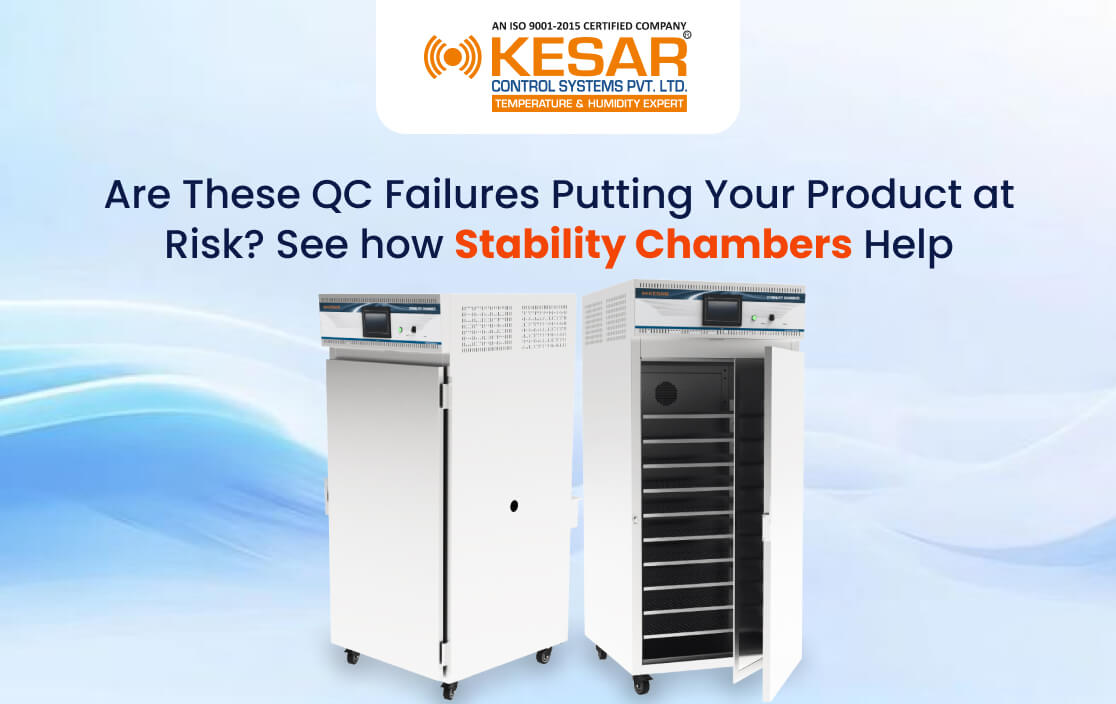
Are These QC Failures Putting Your Product at Risk? See How Stability Chambers Help
Quality control is the backbone of any product-driven industry. Whether you are manufacturing pharmaceutical drugs, food products, cosmetics, or speci...